Turkey is rapidly expanding its network of archaeology museums, with major projects underway in cities such as Istanbul, Ankara, and Gaziantep. Official discourse around these institutions frames them as symbols of cultural pride—secular spaces celebrating the 10,000-year history of Anatolia.
Yet archaeological museums are not neutral repositories of objects; they are active narrative machines. The artifacts they display—and the stories they prioritize—contribute to broader ideas about who belongs, what counts as heritage, and which pasts matter to the present.
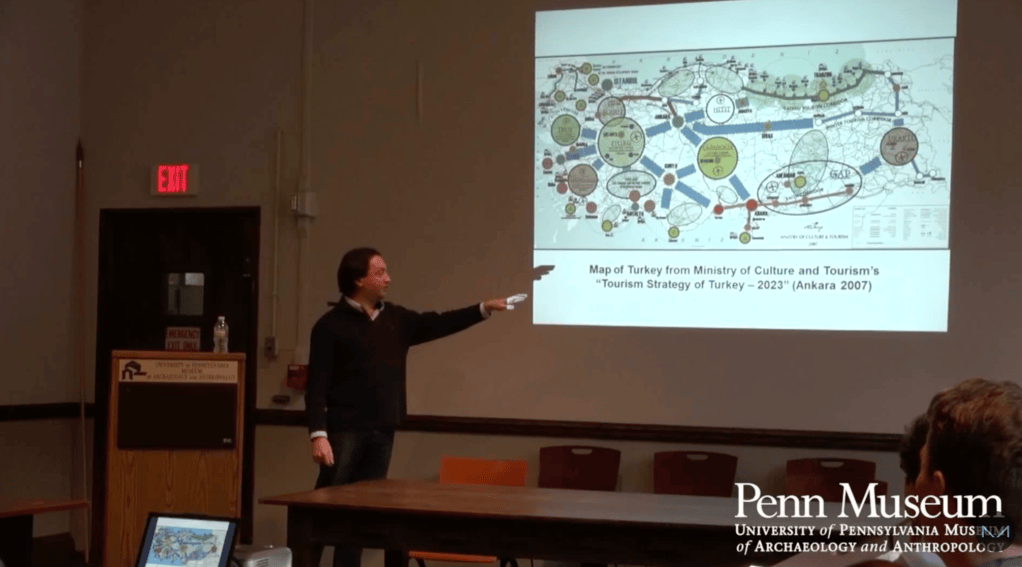
In this presentation given at the Penn Museum in February 2013 for the Penn Cultural Heritage Center, I explore how archaeology museums in Turkey reflect and shape national narratives of the past—and why contested heritage often finds itself at odds with the stories these institutions choose to tell.
What Gets Displayed—and What Gets Left Out
In many contemporary museum displays, ancient civilizations are showcased in ways that emphasize continuity with the modern Turkish state. Local Neolithic origins, Hittite and Roman glories, and Ottoman legacies are woven into a national historical tapestry. But this framing can marginalize, erase, or silence other histories: minority cultures, displaced communities, and complex entanglements that do not fit neatly into dominant national narratives.
In the presentation, I argue that contested heritage seldom feels at home in archaeological museums. These institutions confront tensions between heritage as a source of inclusive understanding and heritage as a tool for political legitimation.
Beyond Display: Museums in Their Local and Political Contexts
The politics of archaeology and museums in Turkey cannot be separated from broader cultural and political dynamics. Archaeological heritage management often intersects with:
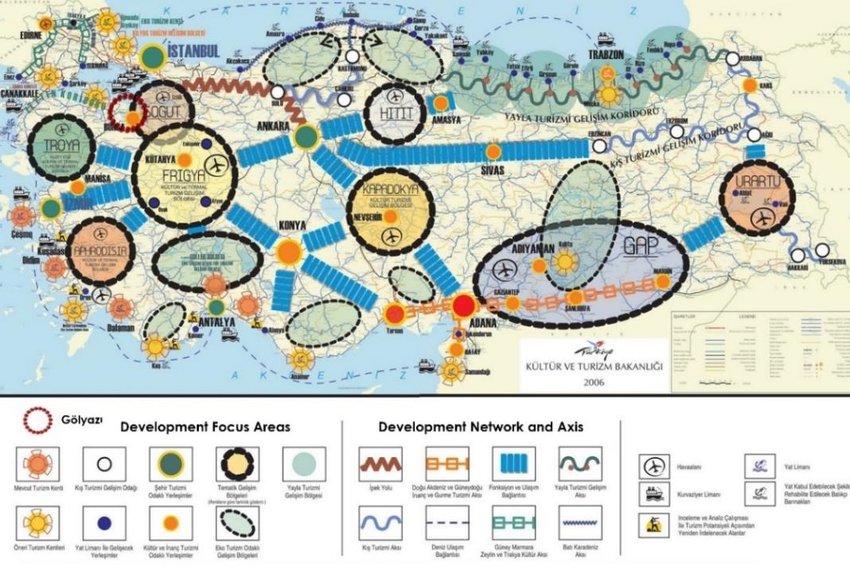
- State-led identity construction and tourism development
- Selective highlighting of ancient pasts over recent, contentious histories
- Processes of erasure and exposure in the built environment and museum practice
Museums claim universal significance, but their narratives frequently reflect the priorities of powerful institutions rather than the multiplicity of lived experiences tied to the artifacts on display.
The Role of Archaeology Beyond Museums
Contested heritage also takes shape outside museum walls. Fieldwork, rescue excavations, and grassroots heritage activists all play roles in shaping how pasts are engaged—and who gets to tell these stories.
My own research examines how archaeological practice has been mobilized in Turkey and the wider Middle East, not only to recover the distant past but also to navigate contemporary political claims and cultural erasures. For example, archaeological salvage projects have documented sites threatened by development, even as they reveal how excavation itself can produce forms of exclusion or selective remembrance.
Looking Forward: Rethinking Museums and Memory
As new museums open and collections grow, the questions we must ask include:
- Whose voices are amplified—and whose are muted—in museum narratives?
- Can museums move beyond national myth-making toward more inclusive practices?
- How might contested heritage be integrated into exhibitions in ways that acknowledge complexity rather than simplify it?
Rather than accepting heritage as a single unified story, we should treat it as a contested and negotiated terrain, where multiple pasts coexist and compete for recognition.
Closing Thoughts
Archaeology museums in Turkey offer unparalleled opportunities to engage with deep histories. Yet they also remind us that heritage is never neutral. As sites of both preservation and power, these institutions shape collective memory while negotiating social and political tensions.
The presentation is an invitation to reflect on these dynamics and to consider how we might approach heritage with both critical inquiry and ethical engagement.


You must be logged in to post a comment.