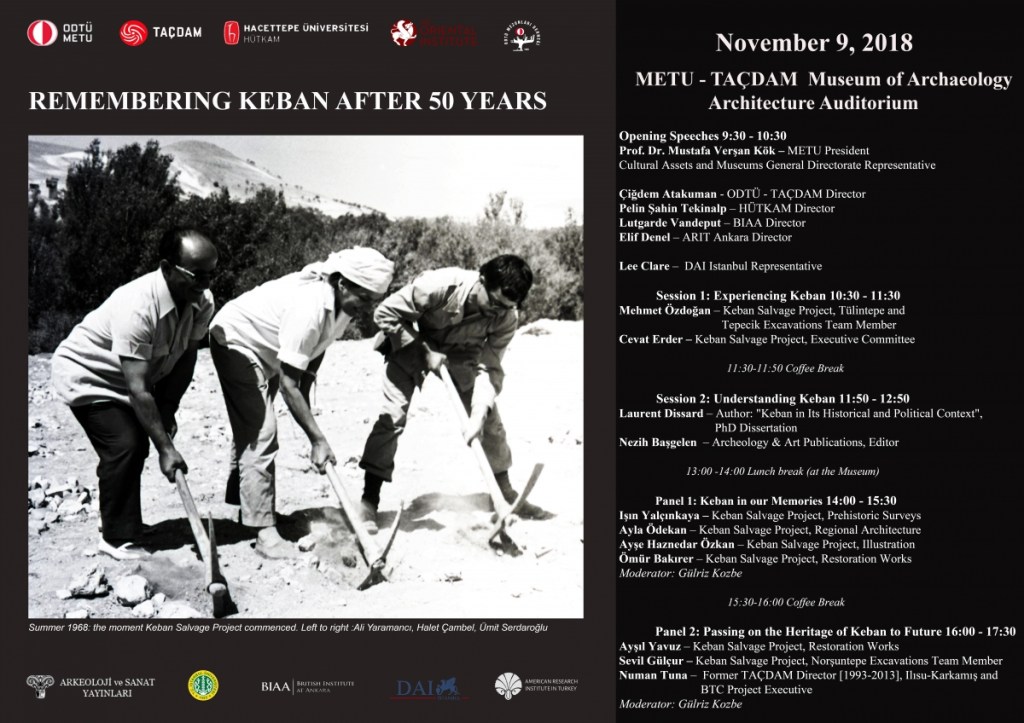
On November 9, 2018, Middle East Technical University (METU) organized the conference “50 Yıl Sonra Keban’ı Hatırlamak” (Remembering Keban After 50 Years), held on the METU campus and dedicated to revisiting the legacy of the Keban Dam Rescue Project. I am deeply grateful to Işılay Gürsu and Lutgarde Vandeput at the British Institute at Ankara (BIAA), and to Çiğdem Atakuman at METU, for their generous invitation and for creating the conditions for a thoughtful and critical reassessment of this landmark moment in Turkish archaeology.
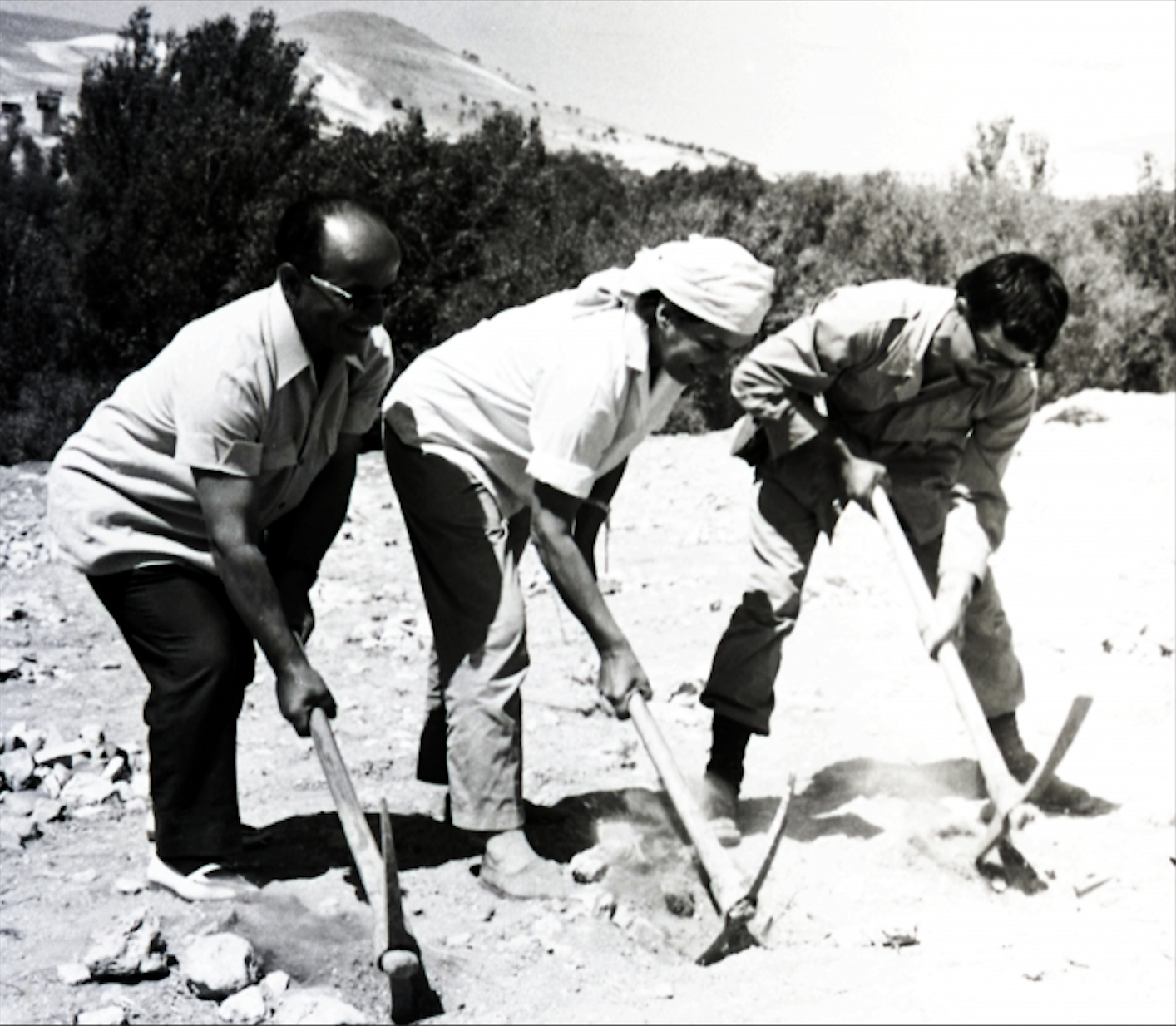
Launched in the late 1960s in anticipation of the flooding of the Euphrates valley, the Keban Dam Rescue Project coordinated surveys and excavations across a vast area destined to disappear beneath the reservoir. It has long been celebrated as a pioneering, even heroic, episode in the history of rescue archaeology in Turkey: a large-scale, multidisciplinary mobilization that documented hundreds of sites under extreme temporal pressure. For many participants, it marked the beginning of a new era of archaeological practice and international collaboration.
The conference brought together archaeologists, historians, architects, and other scientists to reflect on this legacy fifty years later. Senior scholars, including Mehmet Özdoğan and Cevat Erder, shared personal recollections of fieldwork conditions and institutional improvisations that shaped the project’s trajectory. These testimonies offered valuable insight into the ambitions, constraints, and intellectual climate of the period.
Archival Perspectives and Critical Reassessment
In my own presentation, I sought to position Keban within a broader historical and political framework. Drawing on extensive archival research — including site reports and unpublished documentation — I offered a critical reassessment of the project’s historiography. While acknowledging its undeniable scientific contributions, I argued that the dominant narrative of Keban as an unambiguous success tends to smooth over tensions that were central to its formation: frictions between development imperatives and archaeological priorities, asymmetries within international partnerships, and the limited consideration given to local communities whose landscapes were irrevocably transformed.
By foregrounding these archival dimensions, my intervention aimed not to diminish the achievements of those who worked under immense pressure, but to complicate the story. If Keban has become foundational to the institutional memory of Turkish archaeology, it is precisely because it crystallizes enduring questions about the relationship between infrastructure, heritage, and power. The conference demonstrated that fifty years on, Keban remains more than a chapter in disciplinary history. It is a lens through which to examine how archaeology operates in contexts of irreversible transformation — and how its own narratives are constructed, consolidated, and, at times, left insufficiently interrogated.


You must be logged in to post a comment.