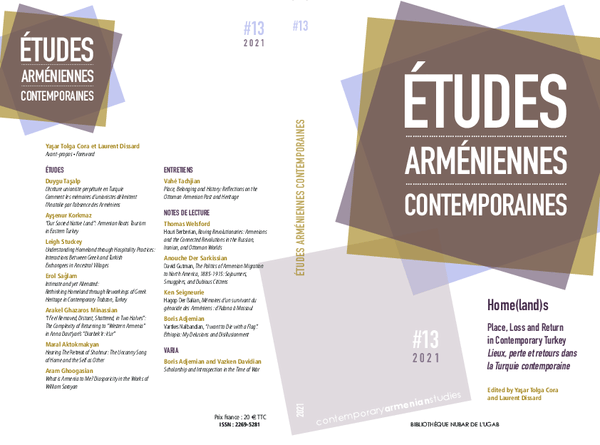
The notion of home(land) occupies an uneasy space between place, memory, and imagination. It evokes intimacy and attachment as much as distance and rupture; it gestures toward both lived experience and projected belonging. In contexts shaped by genocide, forced displacement, and denial, home and homeland cannot be approached as stable referents or recoverable origins. They are produced instead through narratives, practices, and forms of knowledge that are themselves shaped by violence. This volume takes home(land) as a question rather than a given, an analytic lens through which to examine how loss, return, and belonging are lived and governed in contemporary Turkey.
Coordinated jointly with Yaşar Tolga Cora, the volume brings together contributions that approach home(land) as an affective, spatial, and epistemic field rather than a fixed location. Rather than asking how homes or homelands might be restored, the volume asks how attachments to place are shaped, mediated, and constrained by histories of violence and by the institutional and cultural frameworks through which those histories are made intelligible.
The seven articles gathered in Volume 13 of Études arméniennes contemporaines form the analytic core of this intervention. Several engage directly with archives and historical narration, foregrounding how absence, rather than presence alone, structures understandings of place. Duygu Taşalp examines how Unionist memoirs and retrospective writings delineate Anatolia through the systematic absence of Armenians, showing how homeland is narrated into coherence through erasure. Here, violence persists not only in what is said, but in what is rendered unsayable.
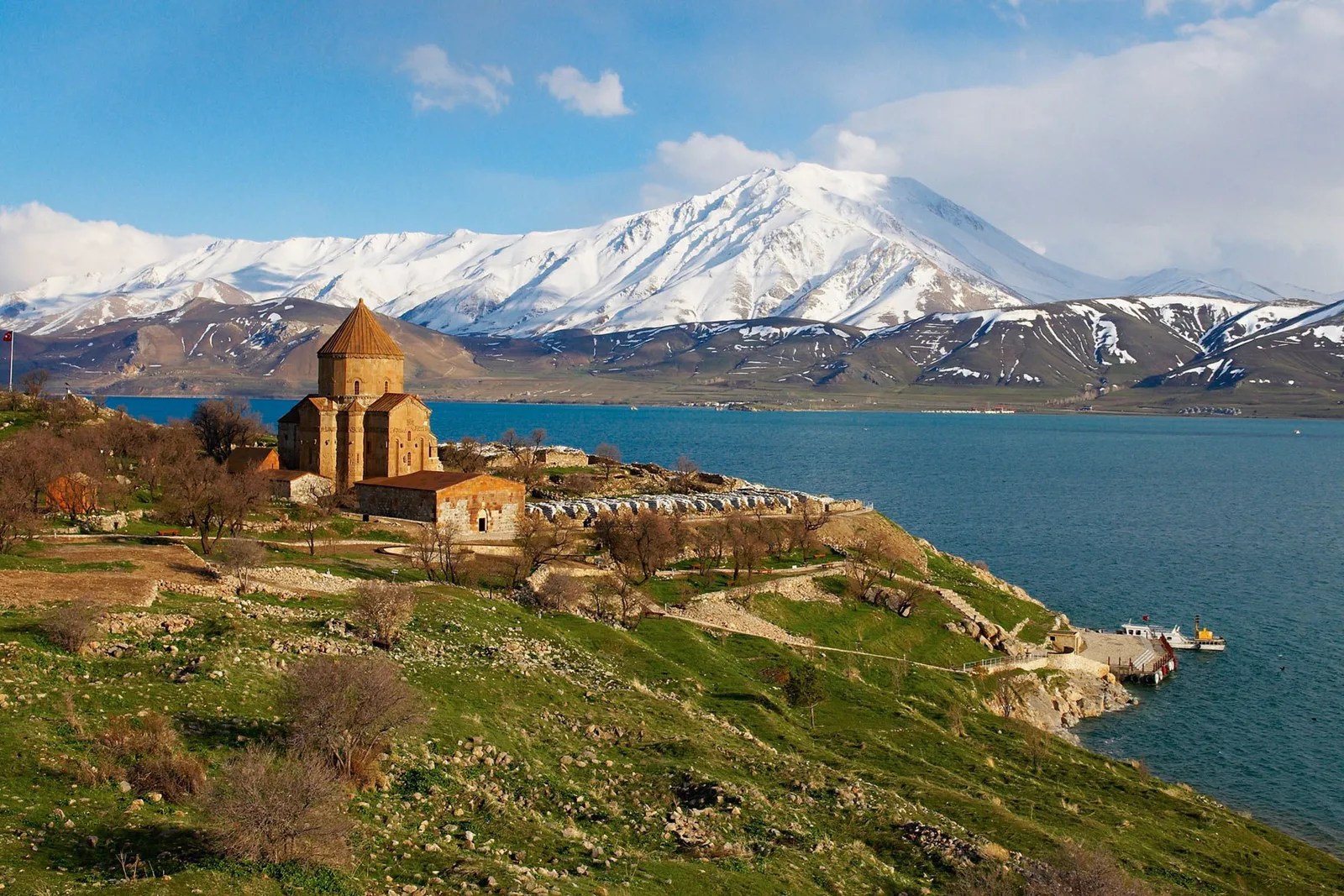
Other contributions explore return, mobility, and encounter as practices through which home(land) is negotiated rather than reclaimed. Ayşenur Korkmaz analyzes Armenian roots tourism in Eastern Turkey, where travel becomes a means of engaging with a homeland that is simultaneously intimate and inaccessible. Return does not resolve loss; it exposes the affective and political tensions that continue to structure belonging after displacement. Similarly, Leigh Stuckey approaches homeland through practices of hospitality among Greek and Turkish descendants of the population exchange, showing how encounters in ancestral villages produce fragile, negotiated forms of belonging grounded in interaction rather than origin.
Several articles turn to heritage and cultural mobilization as sites where home(land) is actively reworked. Erol Sağlam examines engagements with Greek heritage in Trabzon, tracing how homeland can be simultaneously intimate and alienating, and also claimed, reinterpreted, and distanced through heritage practices that unsettle clear lines of ownership or continuity.
The volume also foregrounds literary and aesthetic engagements with home(land), where affect, estrangement, and fragmentation come sharply into view. Arakel Ghazaros Minassian reads Anna Davtʻyan’s writing on Diyarbakır to explore return as dislocation rather than reconciliation, marked by distance, fracture, and ambivalence. Maral Aktokmakyan revisits Shahnur’s La retraite sans fanfare, attending to the uncanny dimensions of home, where familiarity and otherness collapse into one another. In a related but diasporic register, Aram Ghoogasian examines William Saroyan’s writing to show how Armenia emerges less as a territorial anchor than as a condition imagined, narrated, and continually deferred.
Across these contributions, home(land) appears not as a stable object of recovery, but as a site where violence continues to operate through memory, narrative, and knowledge production. Affect—longing, estrangement, nostalgia, discomfort—is not treated as a residual emotion, but as an analytic entry point into how attachments to place are formed and constrained.
The editorial process itself echoed these concerns. Working together across different intellectual traditions and institutional contexts, Yaşar Tolga Cora and I were attentive to the asymmetries that structure scholarship on Turkey and its contested pasts: between languages, archives, disciplinary norms, and national historiographies. One of the aims of the volume was not to smooth over these asymmetries, but to render them visible and analytically productive.
Importantly, Home(land)s does not treat recognition, heritage, or return as inherently reparative. Several contributions show how practices of recovery can coexist with new forms of erasure or appropriation, and how preservation may accompany dispossession. In this sense, the volume resonates with broader debates in heritage studies, anthropology, and memory studies, where attention has shifted from acknowledgment alone to the conditions under which acknowledgment is framed and governed.
What the volume ultimately offers is a reframing of how violence is approached analytically. By treating home and homeland as unstable, affective, and epistemic problems, it invites readers to move beyond event-based histories of rupture and toward the ongoing processes through which loss is inhabited, narrated, and managed in the present. Rather than offering closure, the volume insists on staying with this difficulty and on taking seriously the work that home(land) continues to do in the afterlives of violence.


You must be logged in to post a comment.