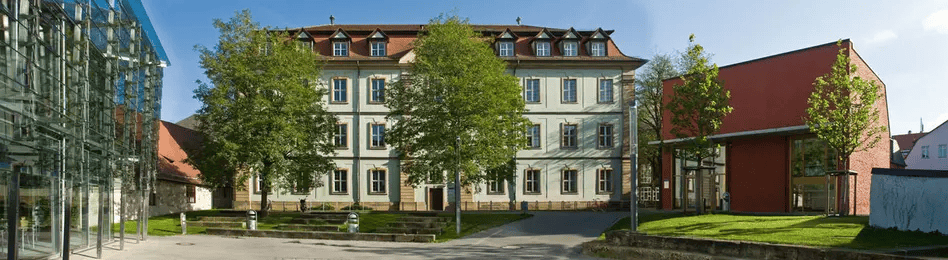
On December 2-3, 2022, I attended Contested World Orders: The Global Heritage Discourse and Practice in Times of Crises and Conflict, a two-day interdisciplinary conference hosted by the University of Bamberg. Bringing together scholars from heritage studies, anthropology, art history, and archaeology, the conference examined how cultural heritage becomes entangled with violence, governance, and competing political claims in moments of crisis.
Across panels, participants approached heritage not as a stable object to be preserved but as a contested field shaped by war, displacement, nationalism, and global institutional frameworks. Case studies ranged from conflict-affected cities and postwar reconstruction to museums, legal regimes, and international heritage infrastructures. A recurring concern was the friction between universalist heritage discourses and the lived realities of communities whose pasts are administered, instrumentalized, or erased in the name of protection.
Several papers foregrounded the role of expert knowledge — archaeological, legal, architectural — in producing authority over the past, while others critically examined how heritage governance can naturalize inequality or legitimize state violence. Discussions repeatedly returned to questions central to anthropology and critical heritage studies: how local sites become global heritage, how emergency interventions reshape social life, and how heritage is mobilized to stabilize political narratives during periods of rupture.
My own presentation briefly engaged these debates by reflecting on Tahir Elçi’s final public speech at Diyarbakır’s Four-Legged Minaret, focusing on how heritage was invoked as a moral and political appeal against ongoing violence shortly before his assassination.
The conference as a whole offered a generous and intellectually rigorous space for exchange, making visible the ethical stakes of studying heritage in contexts of crisis. I am grateful to the organizers for bringing together such a thoughtful group of scholars and for creating a forum in which heritage could be discussed not only as an object of care, but as a site of political struggle, responsibility, and critical reflection — concerns that remain central to contemporary anthropology and heritage studies.

