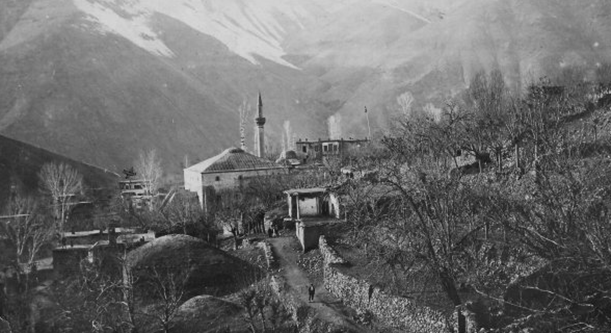
Street view of Keban before the construction of the Keban Dam. Source: Keban Municipality.
What does a dam do to time? On 22 May 2024, I gave the keynote “It’s About Time: Dams, Flooding and Temporality” at UCL’s Institute of Advanced Studies. The conference, Dams, Displacements, Legacies: The Making of Inland Reservoirs in Global, Comparative and Multidisciplinary Perspectives, brought together different disciplinary approaches to inland reservoirs. My presentation explored how dams change relationships between past, present and future, as well as the landscapes through which those relationships take shape.
At a technical level, dams regulate flows. They hold back water and release it according to demands for electricity or irrigation. This ability to control when water moves helps explain why they are so closely associated with promises of progress. A reservoir can appear to turn an unpredictable river into a resource for a national future.
Those promises are experienced unevenly. Keban, built on the Upper Euphrates between 1966 and 1974, offered electricity and development while its reservoir threatened homes, fields and places of attachment. The familiar distinction between life “before” and “after” a dam brings some of these changes into view, but it can also conceal the persistence of uncertainty and the different ways people live with loss.
The second part of the keynote considered anti-dam protests as “memory gatherings”. In Dersim and elsewhere, environmental mobilisation can draw together histories of displacement, state violence and belonging. Gatherings take many forms: festivals, workshops, court proceedings, artistic interventions and online exchanges, as well as demonstrations. My work on the Munzur Valley examines how these struggles connect remembered injustices with attempts to shape a different future.
The final part turned to archaeological rescue. Excavating threatened sites produces knowledge under a deadline set by construction and rising water. Reports, photographs and collections can preserve evidence of a landscape while also helping to establish the idea that its disappearance has been adequately recorded. Preservation and erasure can therefore unfold together.
These questions continue to inform my book project, Submerged. They also connect with my later article “It’s about time: On the uneven temporalities of Turkey’s first mega-dam”, published in the Journal of European Studies in 2026. The keynote provided a broader setting for thinking across infrastructural promises, environmental activism and archaeological practice, and for asking whose experiences of time become part of a dam’s history.

