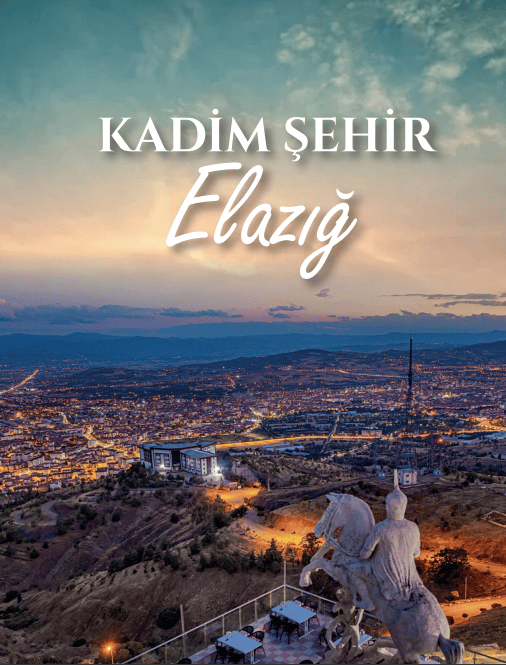
On 1 November 2024, I presented “Heritage Witnessing of Post-Genocidal Elâzığ/Harput in present-day Eastern Turkey” at Cornell University. The conference, Unearthing, Unseeing: Archaeology, Heritage, and Forensics in the Shadow of State Violence, asked how archaeology and heritage can make histories of violence visible, and how they can also leave them unseen.
One figure helps me think through this problem in Harput: Balak Gazi. His equestrian monument stands on an esplanade overlooking the plain. A large sabre is raised above a rearing horse, beside an even taller Turkish flag. Commissioned by the Elazığ Tourism Association in 1964, it belongs to the period when Harput was being developed as a recreational and historical destination.
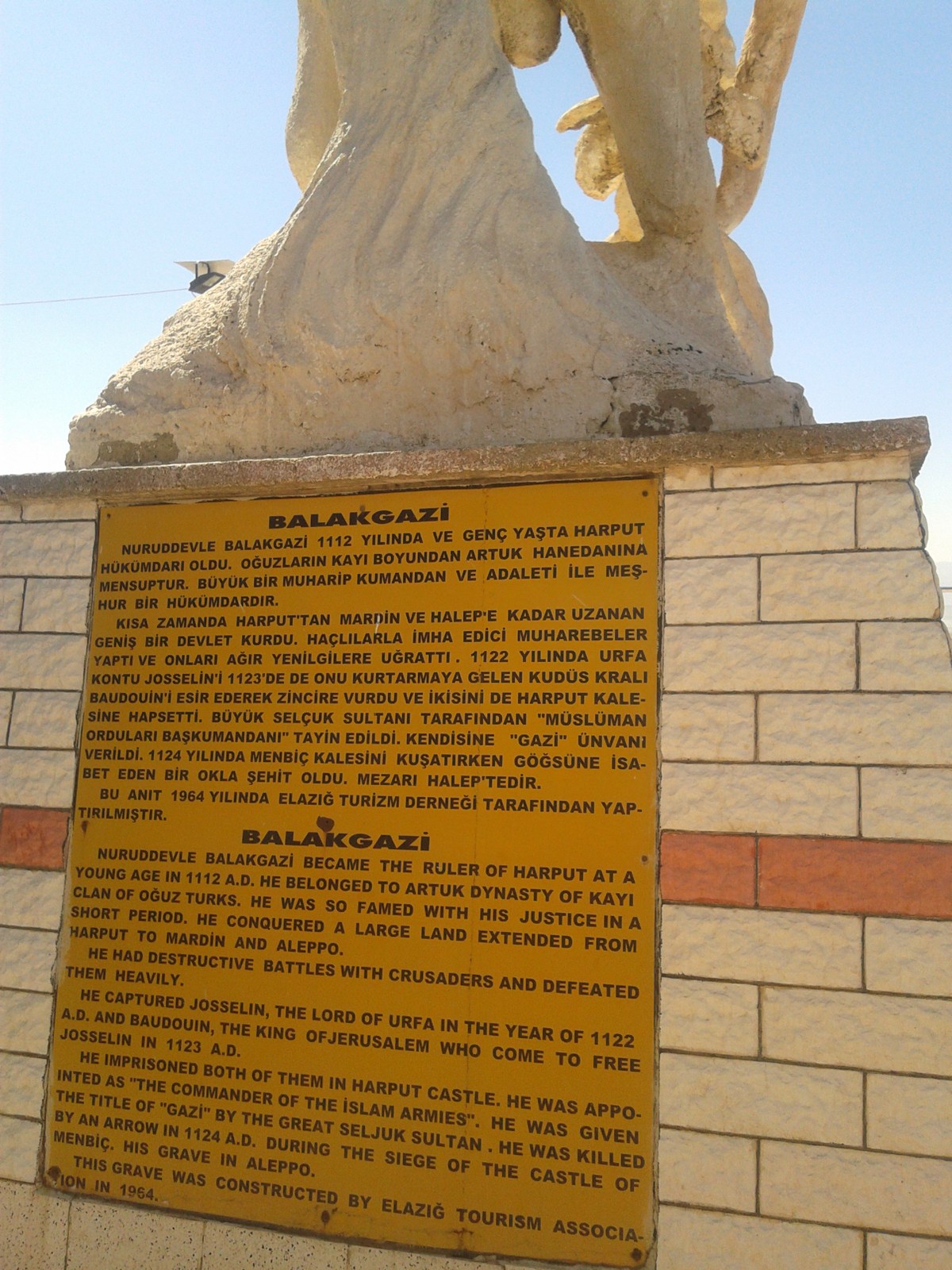
The inscription describes an Artuqid ruler celebrated for military victories and justice. It recounts his capture of Joscelin I, count of Edessa, in 1122 and Baldwin II, king of Jerusalem, in 1123, and their imprisonment in Harput Castle. The medieval past supplies named actors, achievements and virtues. Conquest becomes a history that can be honoured openly.
At the castle, this account has acquired another material setting. In 2021, an underground chamber was opened to visitors as a zindan, or dungeon, associated with Balak Gazi’s Crusader captives. The interpretation of the chamber and the monument gives medieval conquest a prominence that the history of the town’s Armenian inhabitants does not receive.
Developing this research for my forthcoming article “Making Harput into Elazığ’s Past”, I use “displaced commemoration” to describe this relationship. Drawing on Étienne Copeaux’s interpretation of celebrations of Constantinople’s conquest, I ask how Turkish-Muslim possession consolidated through genocide and dispossession can acquire a virtuous ancestry in medieval victories. Recent violence remains outside the explanation, while an earlier conquest offers a past to celebrate.
This is a reading of public framing. It does not presume a concealed intention behind each monument or an identical response among visitors. The question is what these commemorative settings make intelligible: whose presence is explained, whose achievements are named, and which losses remain without an account.
The Cornell conference’s pairing of “unearthing” and “unseeing” remains useful here. Recovering more buildings or displaying more history does not necessarily explain what happened to the people who inhabited them. My earlier work on Armenian heritage in Arapgir approaches a related tension between exposure and erasure. Heritage witnessing begins when those traces are connected to the lives, property and institutions lost through violence.


You must be logged in to post a comment.